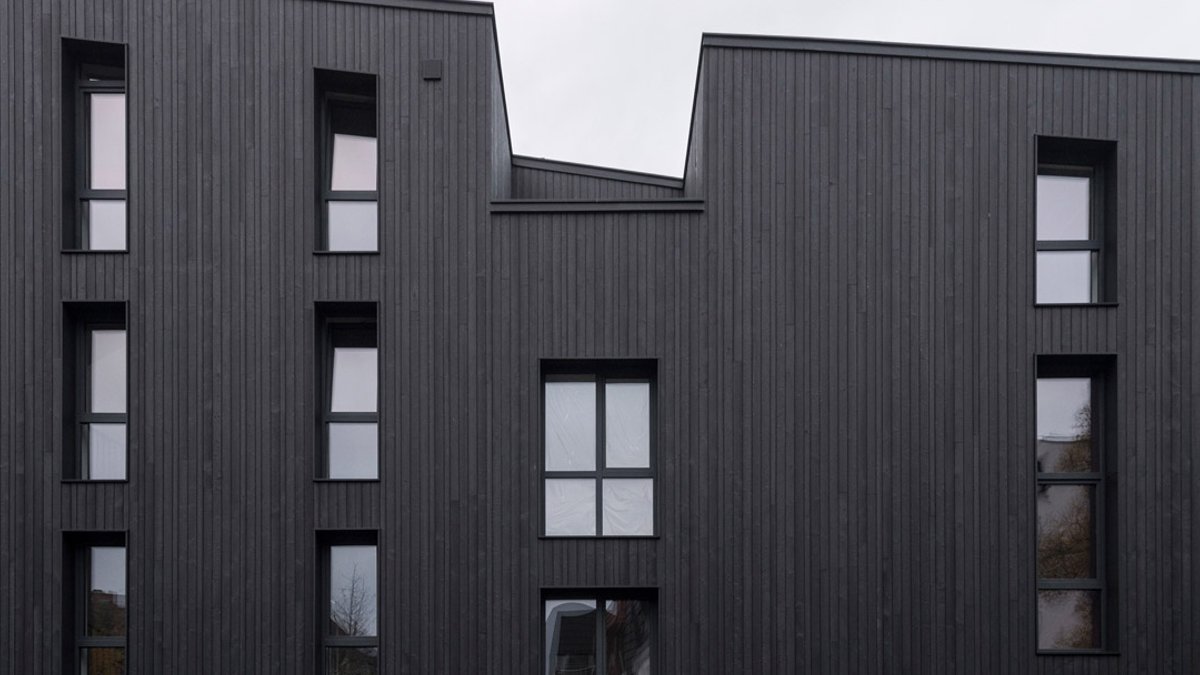
Charred timber cladding, a building material treated with the traditional Japanese Shou Sugi Ban technique, is gaining popularity for its durability and low-maintenance properties. The process involves charring wood to preserve it, followed by the application of natural oils that enhance its resistance to weather and wear.
How the treatment works
The charring process creates a protective layer that shields the timber from moisture, insects, and temperature fluctuations. Once treated, the wood can withstand wet, cold, windy, and hot conditions without deteriorating. Natural oils are then applied, often in a range of colors, to further seal the surface and extend its lifespan.
The finished product is available in shades such as dark black, dark brown, dark grey, light grey, red amber, and amber, as well as an alligator finish. Charred timber cladding is available in larch, Nordic spruce, and Accoya.
Installation and customization
Charred timber cladding comes in various profiles, including shiplap, rhombus, and rectangular (PAR) designs. Standard widths range from 95mm to 145mm, with lengths of 3m or 4m. While vertical or diagonal installation is recommended for optimal drainage and aesthetics, horizontal application is also possible.
Related: London’s Sustainable Future: Lab-Grown Diamonds for Eco-Conscious Men’s Jewelry
For those unsure about quantities, iDomus suggests consulting an architect or contractor and adding an extra 15% to account for waste, offcuts, and overlapping. Lead times for orders vary but typically fall between four to eight weeks, depending on availability and customization.
Maintenance is minimal but necessary
Despite its resilience, charred timber cladding isn’t entirely maintenance-free. The most exposed areas—particularly the south-facing sides of buildings—may require re-oiling every 5 to 10 years to maintain their protective layer. For routine upkeep, a simple wash with water and a soft brush is usually sufficient, followed by re-oiling with natural color oil.
iDomus can post a sample box to customers—contact them by email at [email protected]. You can also see cladding stands in major construction exhibitions.
iDomus: – 087 9705600 – www.idomus.ie – [email protected] – @iDomusIreland – @iDomusIreland